Introduction
The “Five-Block Theory” in mahjong is a crucial concept for understanding the winning hand structure of “4 sets + 1 pair” and deducing opponents’ hand compositions. By mastering this theory, you can read opponents’ waits, avoid dangerous tiles, and significantly improve your push-fold decision-making skills.
Five-Block Theory Basics
- Mahjong is typically played by completing “4 sets + 1 pair” with 14 tiles, and this ideal winning hand is considered to consist of five “blocks”.
- A “set” is a group of 3 tiles, either a “sequence” (consecutive numbers of the same suit) or a “triplet” (three identical tiles).
- A “pair” is a group of 2 identical tiles.
- “Block composition reading” is the technique of deducing from opponents’ discards and calls where and what kinds of blocks (set or pair candidates) they likely have in their hands.
Why the Five-Block Theory Is Important
- Block composition reading is considered the most important technique in mahjong reading.
- Mastering this technique improves the accuracy of various reading skills and dramatically enhances practical playing strength.
- Specifically, it’s extremely useful for:
- Predicting opponents’ waits (reading waits).
- Assessing tile danger levels (evaluating tile risk).
- Predicting opponents’ hand development speed (reading speed).
- Predicting remaining tiles in the wall (wall reading).
- Making push-fold decisions.
- Especially when opponents have made calls (chi or pon), their block composition becomes clearer, and it’s not uncommon to see through their hands almost completely.
- Strong players often practice this block composition reading unconsciously or consciously.
Principles and Applications of Block Composition Reading
In block composition reading, you search for “inconsistencies” in discards, imagine reasons for them, formulate hypotheses, and repeat the verification process.
1. Early Game Discards and Isolated Tile Possibilities
Normally, during hand development, unnecessary isolated tiles (single floating tiles) are discarded first. Therefore, tiles discarded early (roughly up to turns 4-5) are likely to have been isolated tiles.
Examples:
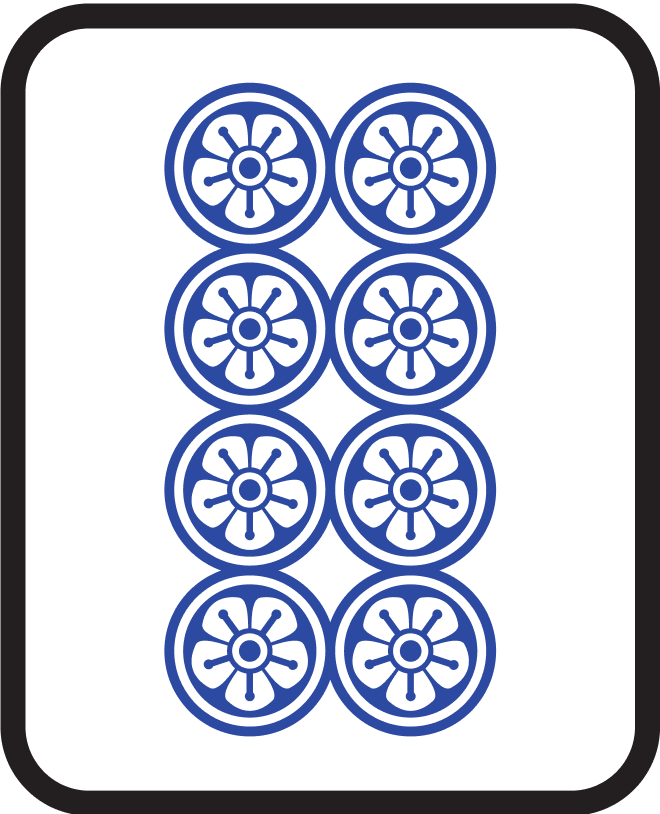 discarded early → Likely no blocks near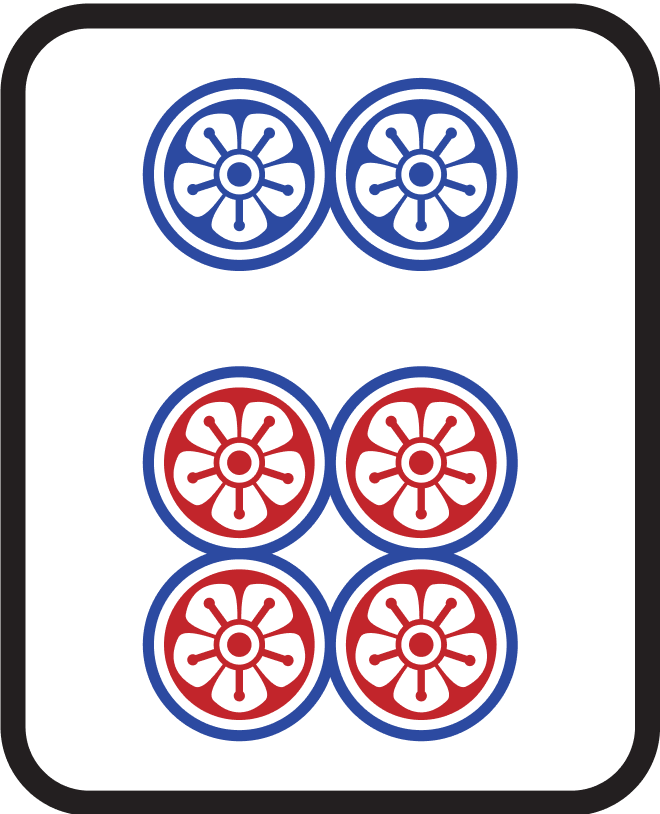
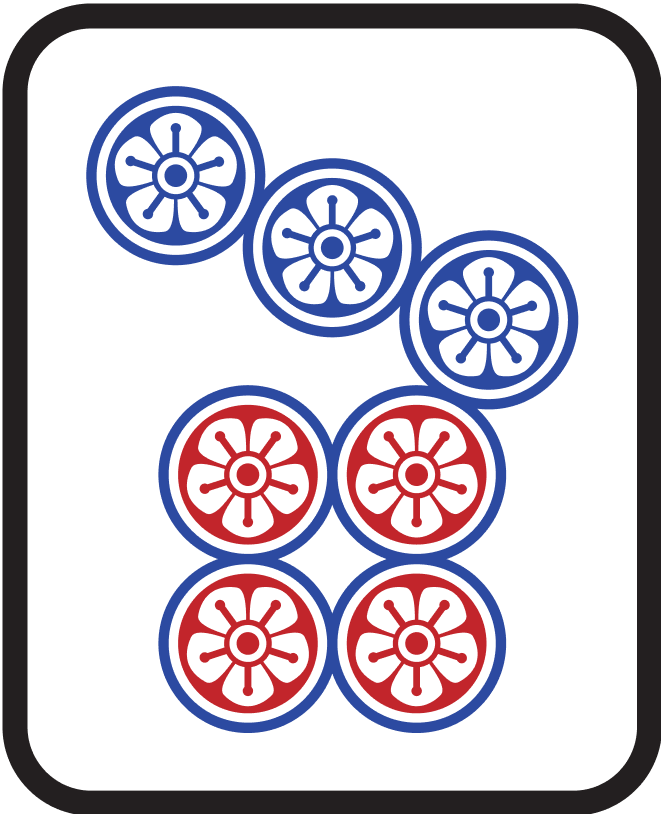
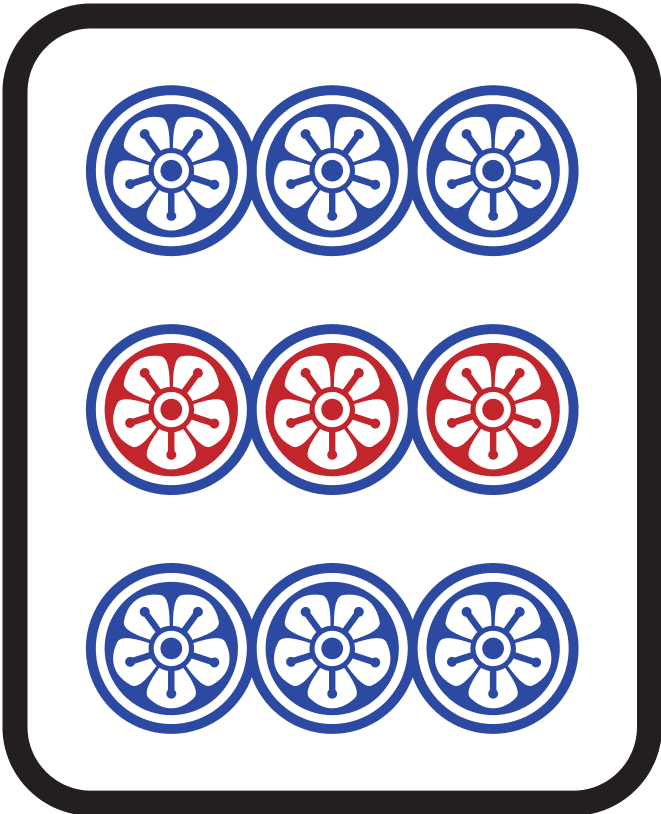
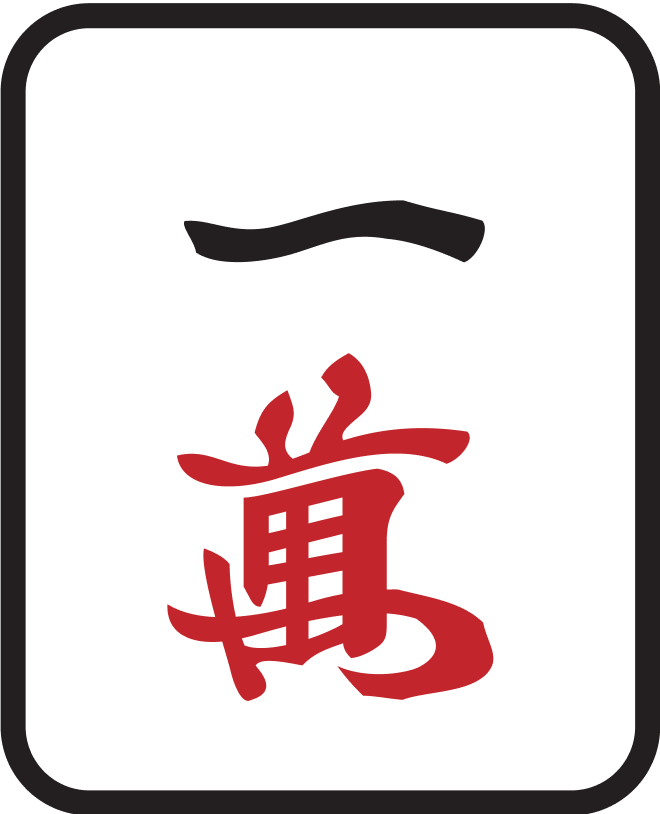
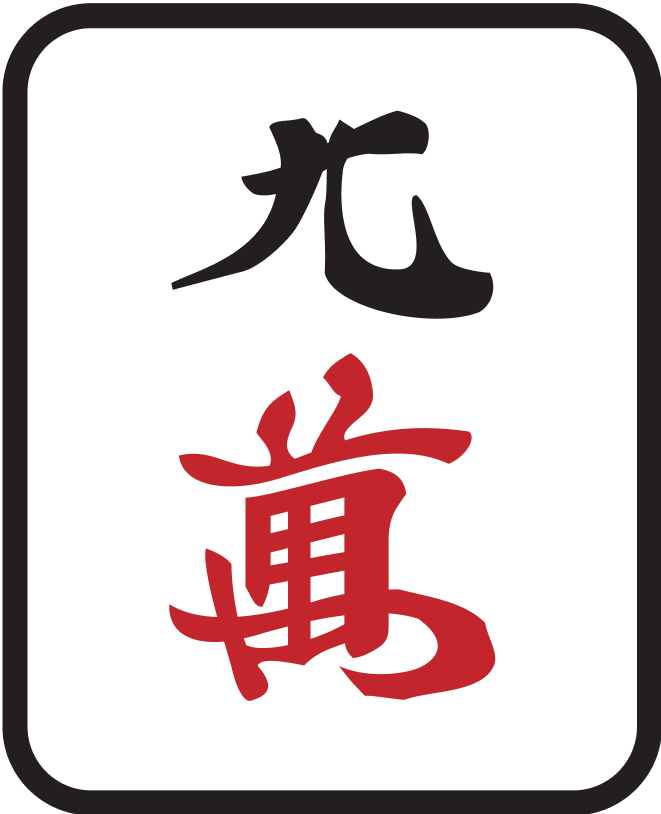 discarded consecutively early → No blocks at manzu edges
2. Value Inversion Phenomenon
When tiles that would normally be discarded early (e.g., terminal tiles or honor tiles) are discarded in later turns, this is called “value inversion.” This suggests there was likely a block (set or pair candidate) around that tile.
Examples:
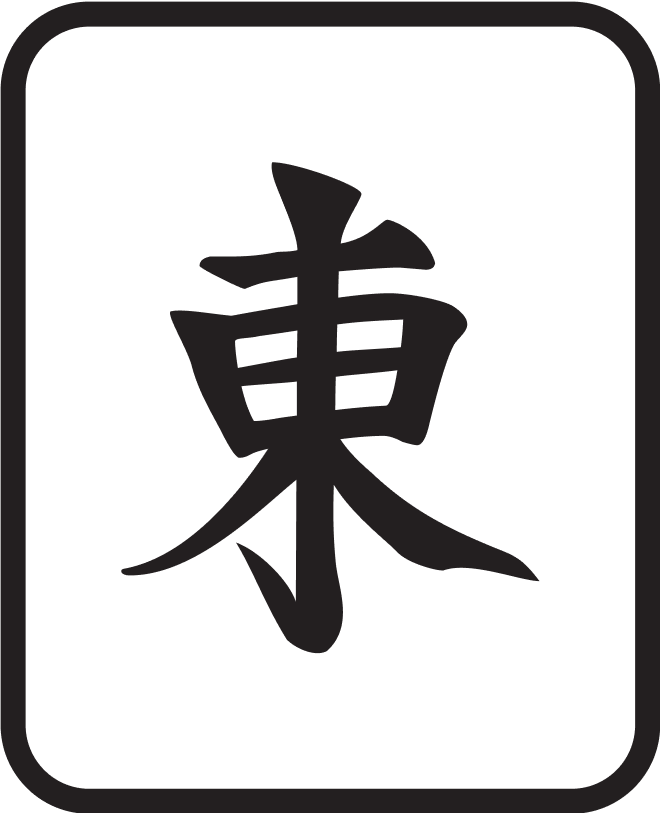 (East) discarded from hand on turn 10 → Possibly broke an East pair
 discarded from hand mid-game → Possibly held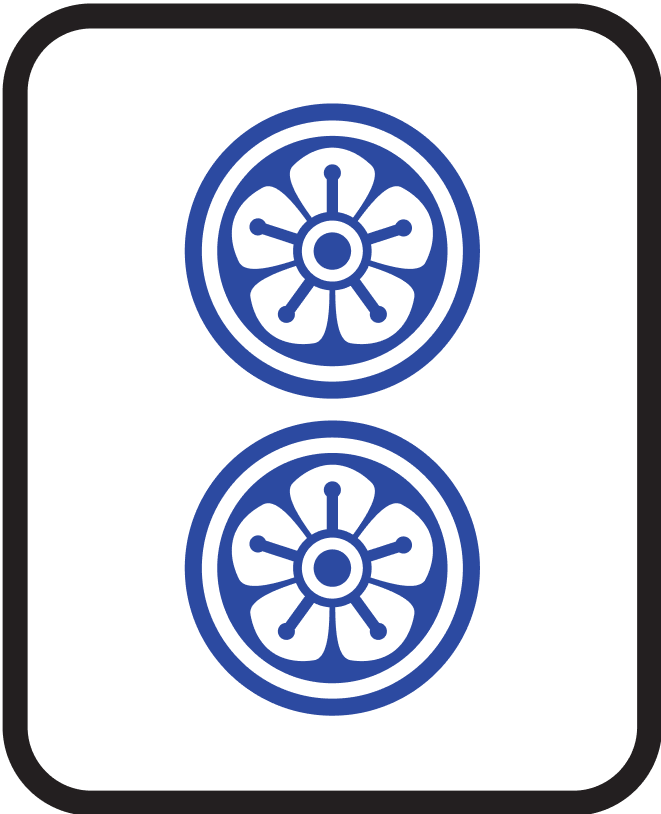
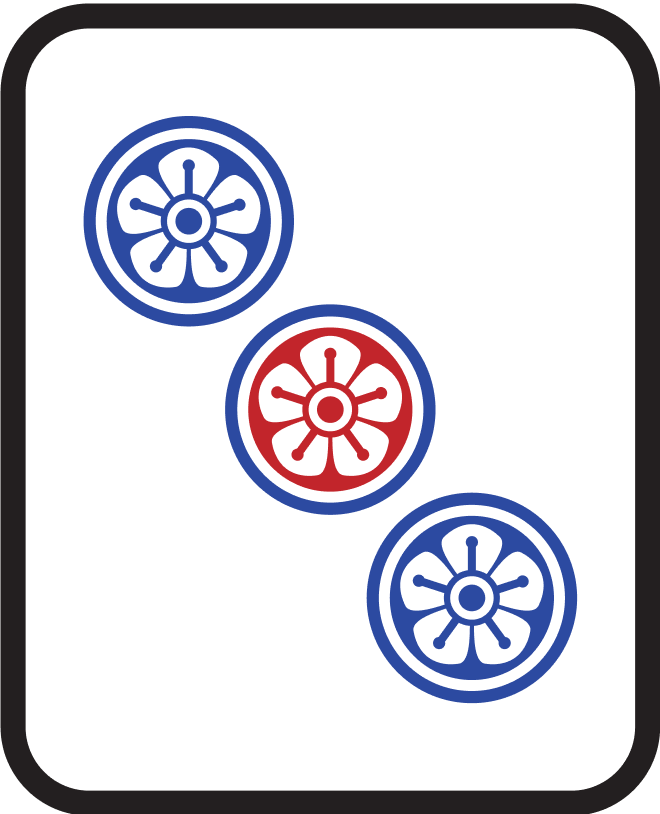 taatsu
3. Difference Between Hand Discards and Draw Discards
Being able to distinguish between hand discards (tiles selected and discarded from hand) and draw discards (tiles discarded immediately after drawing) enables more precise reading.
Reading Points:
- Early game hand discard → Special reason for choice contradicting tile efficiency
- Consecutive draw discards → Evidence of well-organized hand
- Hand discard before riichi → Possibly keeping more dangerous tiles
4. Tile Types and Area Division
Consider dividing manzu, pinzu, and souzu into three areas each:
| Area | Tile Range | Characteristics |
|---|---|---|
| Lower | 1-3 | Easily discarded early |
| Middle | 4-6 | Useful and often retained |
| Upper | 7-9 | Easily discarded early |
| Honors | ESWN WGRC | Independent blocks |
5. Methods for Deducing Block Presence
High Probability of No Blocks
- Two separated tiles from the same suit are discarded
- Example:
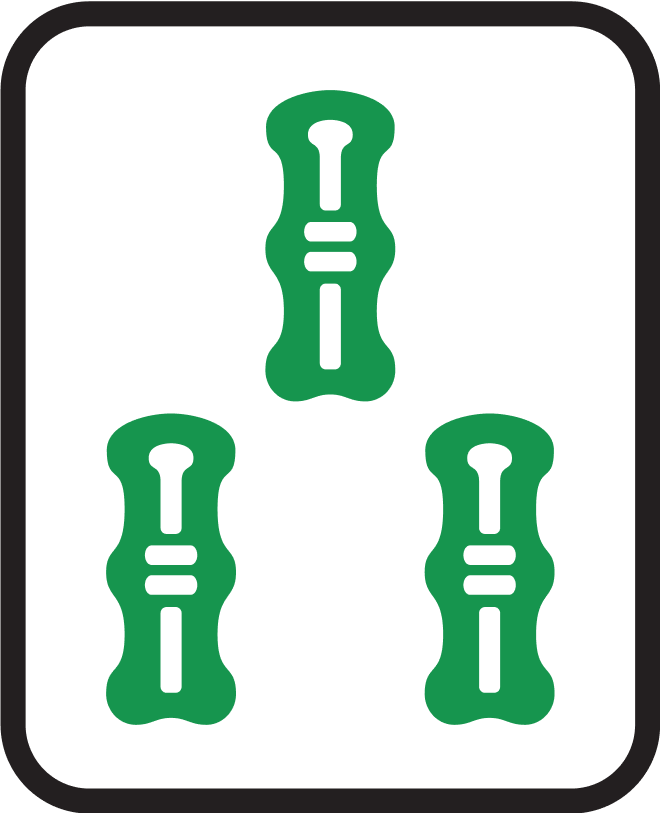 and
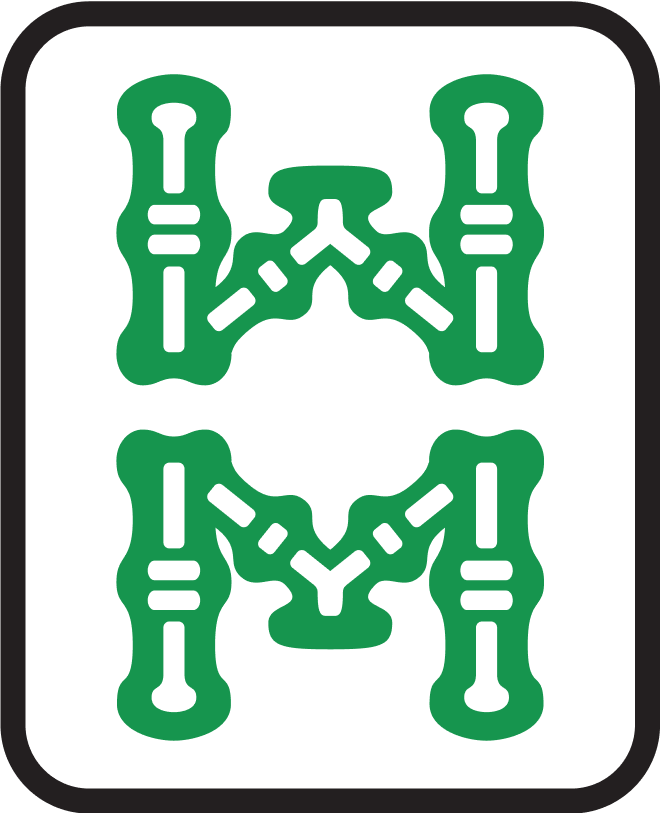
and 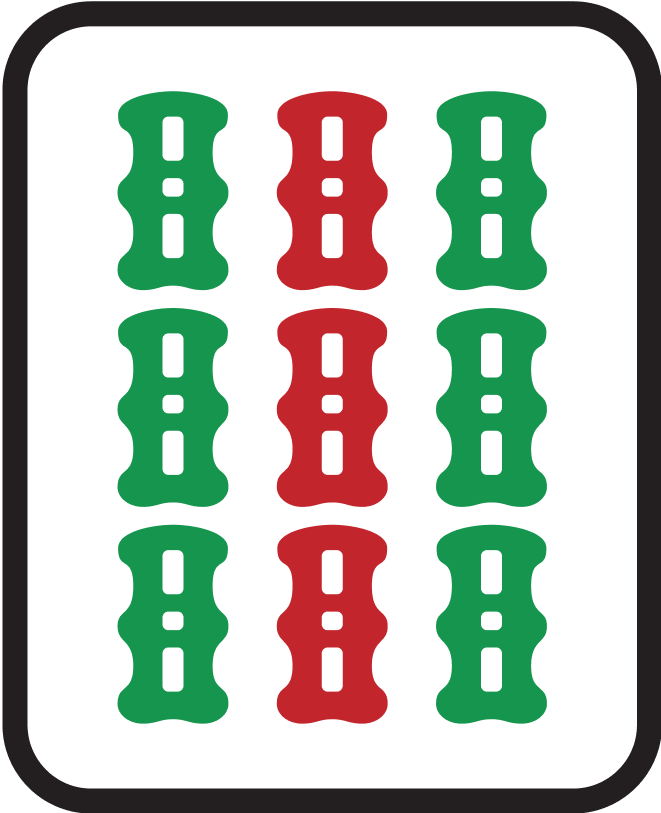 discarded → Possibly blocks in
 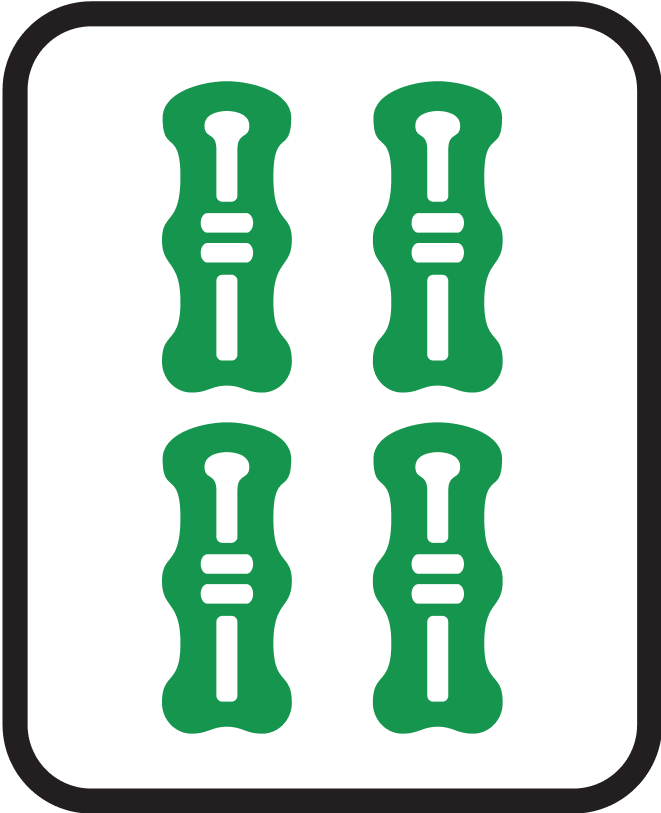 ~
~
High Probability of Blocks
- Only one tile from that suit is discarded
- Example: Only discarded → ~ is danger zone
- Since hands must consist of 5 blocks, process of elimination increases danger level of remaining areas
6. Application to Called Hands
When opponents have made calls (open sets), you can determine remaining block count:
Calls and Remaining Blocks:
- 1 call → 3 blocks remaining
- 2 calls → 2 blocks remaining
- 3 calls → 1 block remaining
Important Reading: After calling, if they discard tiles from the same area (especially dora), there’s very high probability of no more blocks in that area.
Example:
After 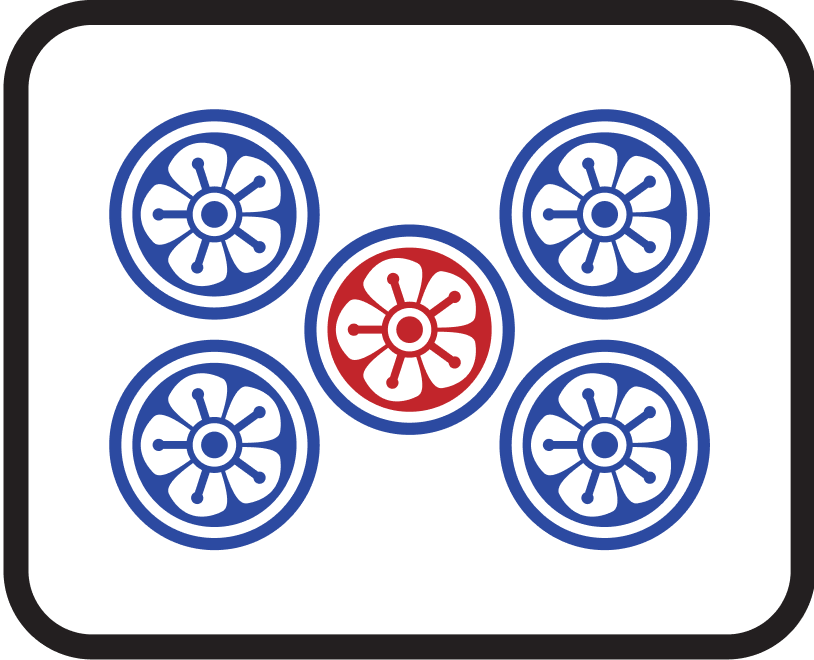
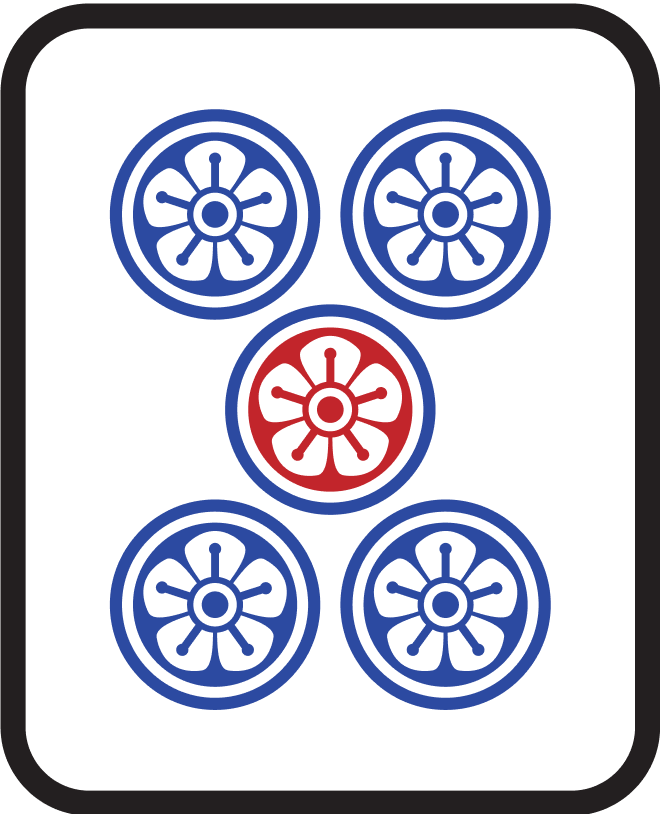 , discarding dora → No blocks in lower pinzu
Practical Application Examples
1. Dangerous Tile Assessment
You can narrow down opponents’ waits from block composition and more accurately assess dangerous tile deal-in rates.
Example:
- Discards:
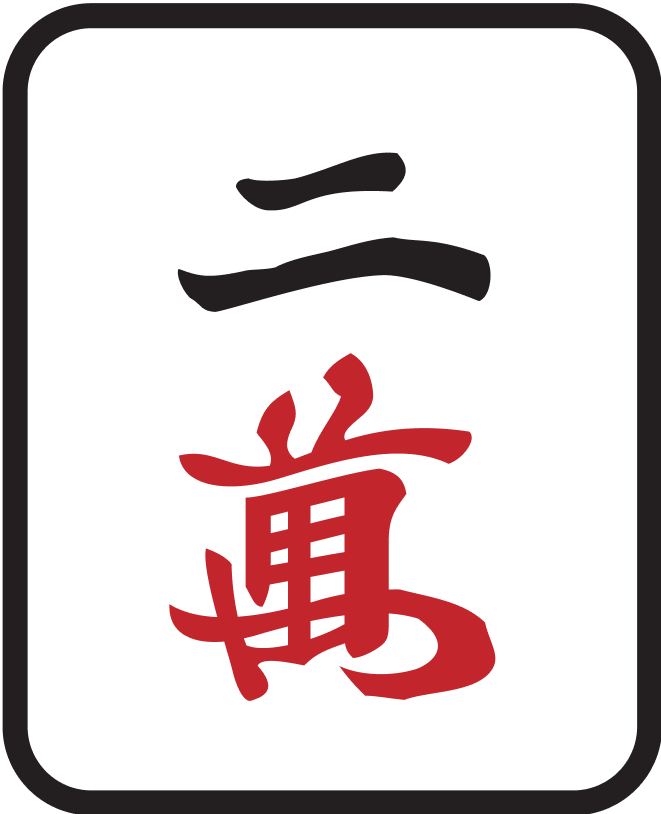
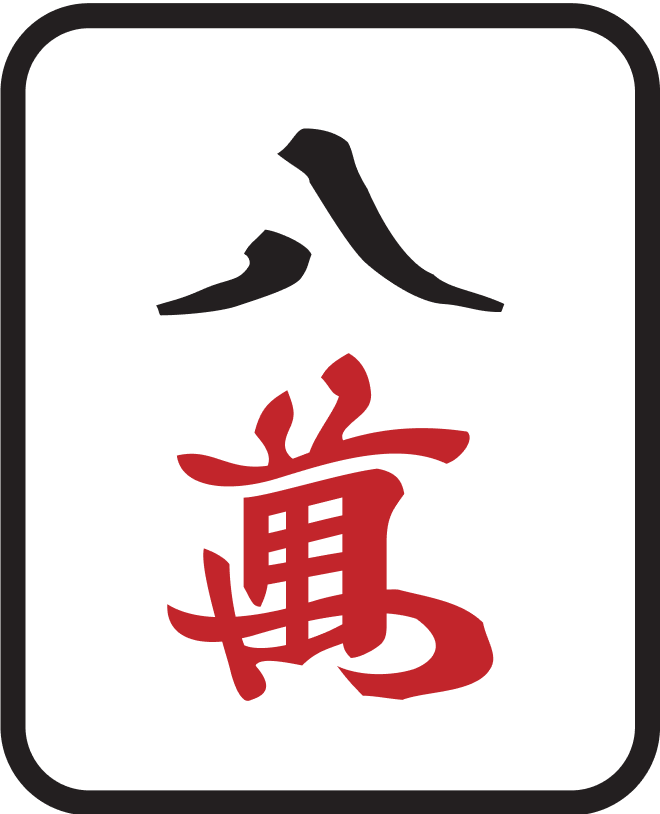
- Reading: Both ends of manzu discarded, so likely blocks in center (
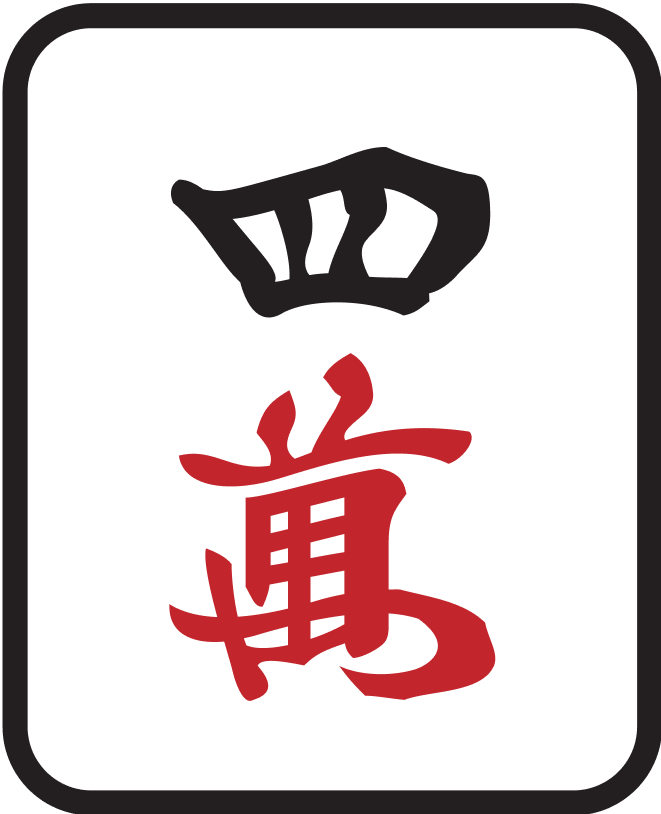 ~
~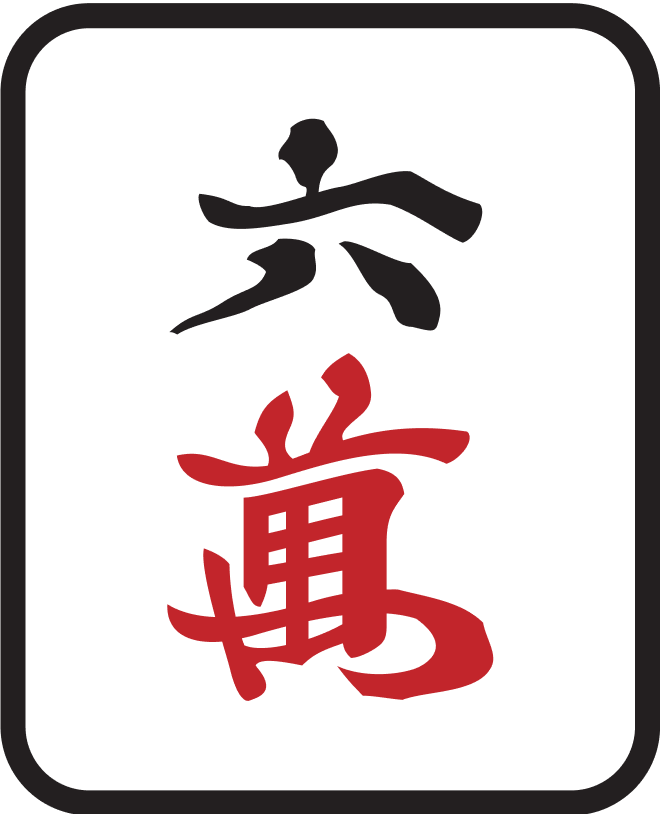 )
) - Dangerous tiles:

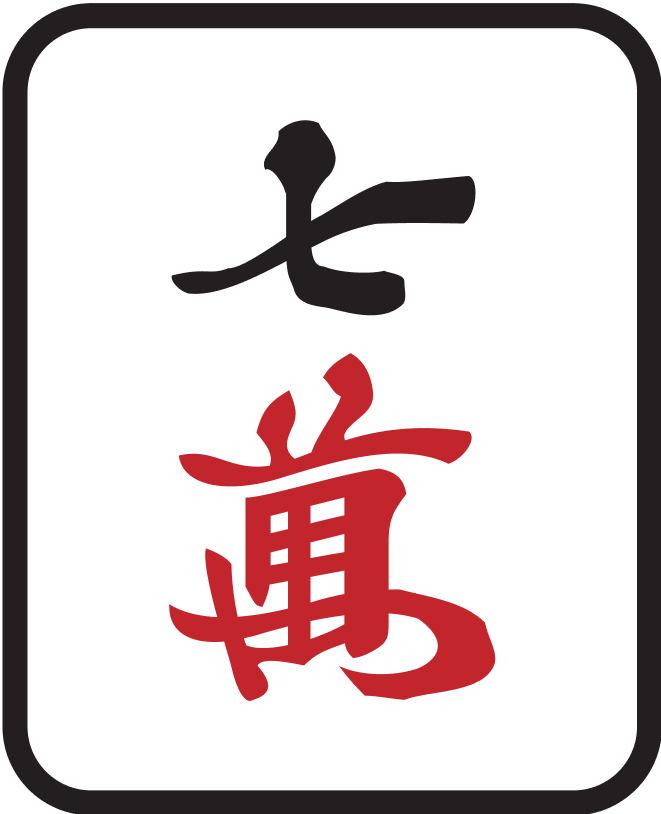 (both non-suji)
2. Push-Fold Decisions
Against opponents’ riichi, make decisions considering danger level deduced from block composition.
Decision Criteria:
- Opponent’s blocks are concentrated → Specific suit extremely dangerous
- Blocks are distributed → Overall caution needed
- Few remaining blocks (called hand) → Limited waits
3. Choosing Your Own Waits
Increase deal-in rates by choosing waits for tiles opponents are unlikely to hold.
Examples:
- Opponent discarding many souzu → Choose souzu wait
- Opponent keeping honors → Choose number tile wait
4. Warning Signs of Special Yaku
Discards that can’t be explained by normal block composition are signs of special yaku.
Patterns to Watch:
- Discarding mostly simples → Possibly Chiitoitsu (Seven Pairs)
- Discarding tiles that could form sequences → Possibly Toitoi (All Triplets)
- Not discarding any tiles of one suit → Possibly flush hand
Learning and Practice Methods
Block composition reading is an intermediate-to-advanced technique, but can definitely be mastered through gradual practice.
Step 1: Game Record Review
Review your match records and practice with these steps:
- Look only at opponent discards and deduce block composition
- Compare with actual hand for verification
- Analyze differences between deduction and reality
Step 2: Inconsistency Detection Training
Checkpoints:
- □ Are honor tiles discarded late?
- □ Are terminal tiles (1・9) discarded late?
- □ Are simples discarded early?
- □ Are tiles of the same suit discarded unevenly?
Step 3: Hypothesis and Verification
When you sense inconsistency, follow this thought process:
- Observe: What was discarded on which turn
- Hypothesize: Why were they discarded in that order
- Deduce: Where are blocks likely located
- Verify: Revise hypothesis based on subsequent discards
Step 4: Practical Application
Beginner Level:
- Count blocks in called hands
- Identify early game isolated tiles
Intermediate Level:
- Detect value inversions
- Deduce block placement by area
Advanced Level:
- Read precisely from hand/draw discards
- Verify multiple hypotheses simultaneously
Frequently Asked Questions
Q1: Is the five-block theory absolute?
A: No. Special yaku like Chiitoitsu and Kokushi Musou don’t follow five-block composition. Also, hands in development may have 6 or more blocks. Use it as a basic framework.
Q2: Can beginners use it?
A: It’s recommended to learn basic tile efficiency first. Starting with reading called hands makes it easier to understand.
Q3: Can it be applied to AI playstyle?
A: Yes. In fact, since AI plays faithfully to tile efficiency, block composition reading can be even more effective.
Conclusion
The five-block theory is a crucial concept that forms the foundation of reading in mahjong. While it may seem difficult at first, start with these points:
- Practice with called hands: Block count is clear and easy to read
- Be conscious of early isolated tiles: Focus on discards up to turns 4-5
- Value inconsistencies: Discard order that differs from theory has reasons
Mastering this theory will definitely elevate your mahjong to the next level. Use it consciously in daily practice, and gradually aim to read unconsciously as well.