Introduction
Want to start playing mahjong but feel overwhelmed by 136 tiles? Actually, mahjong tiles have a similar structure to playing cards! By comparing them to playing cards, you’ll clearly understand how mahjong tiles work.
Basic Structure: Similarities Between Playing Cards and Mahjong Tiles
Playing Card Structure
- 4 suits: ♠Spades, ♥Hearts, ♦Diamonds, ♣Clubs
- 13 cards per suit: A, 2, 3, 4, 5, 6, 7, 8, 9, 10, J, Q, K
- 52 cards total (excluding Jokers)
Mahjong Tile Structure
- 3 suit types + honor tiles: Characters, Dots, Bamboo, Honor tiles
- Suits have 9 tiles each (1-9), 7 types of honor tiles
- 4 copies of each tile for 136 tiles total
Suit Tiles = Playing Card Number Cards
Mahjong suit tiles serve the same role as “number cards” in playing cards. Just as playing cards are divided into 4 suits, mahjong is divided into 3 suits.
Characters (Man) = “Money Symbol” Cards
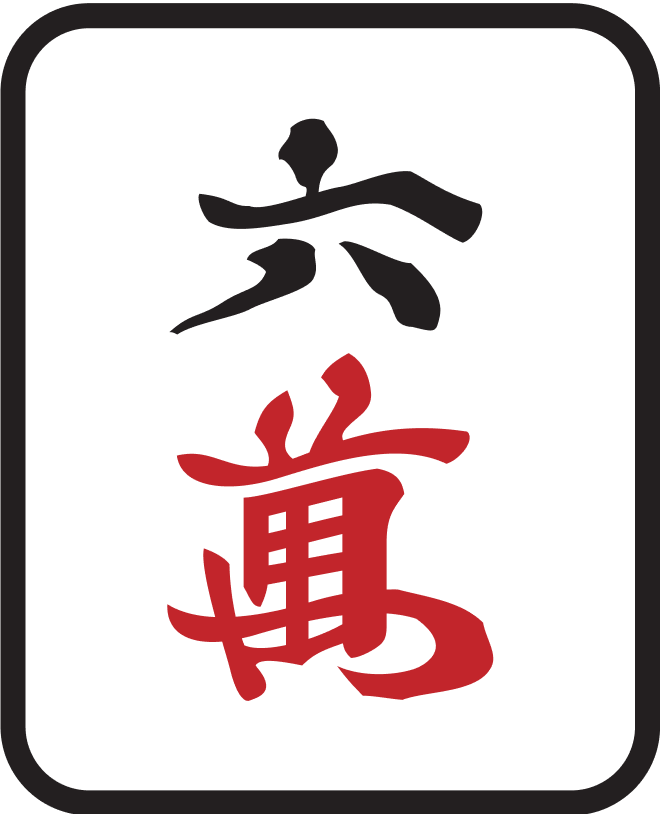
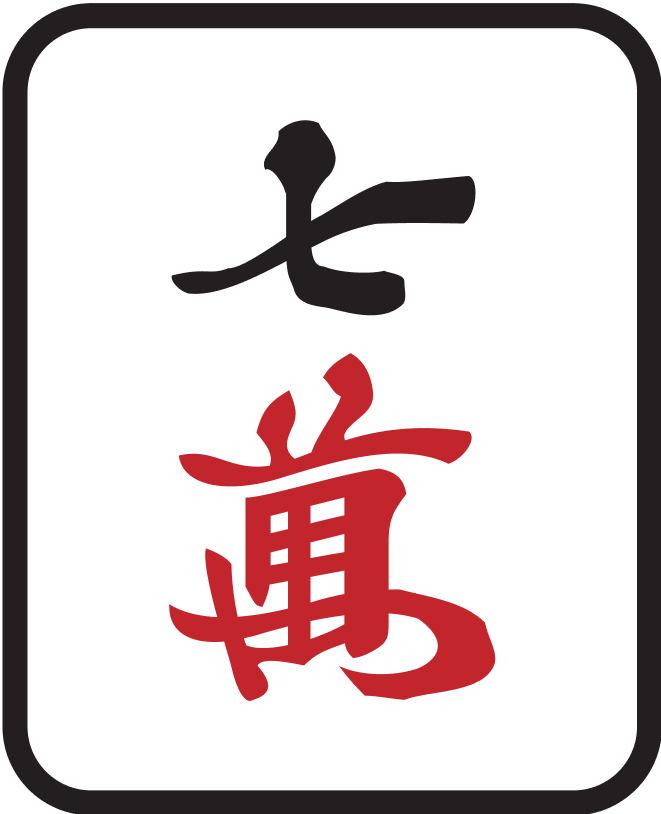
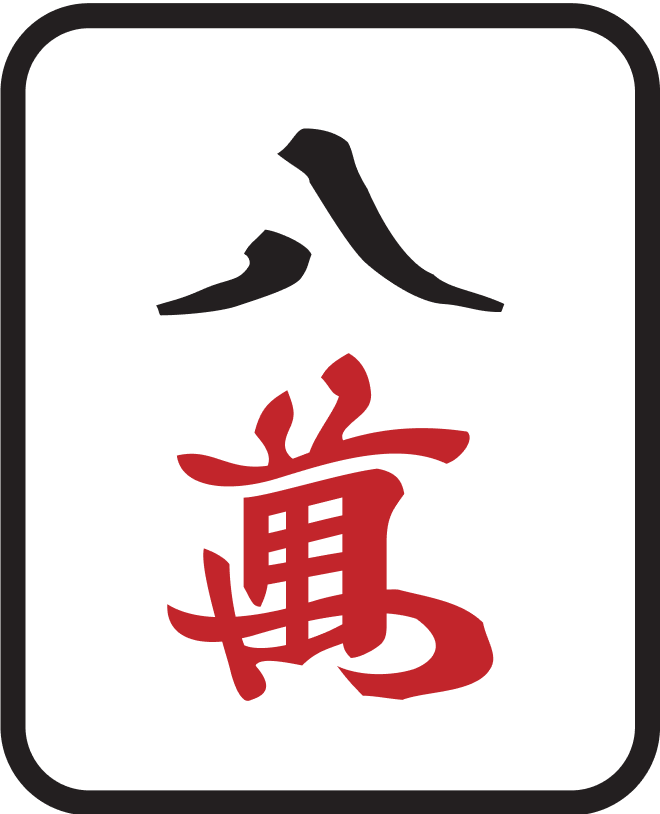
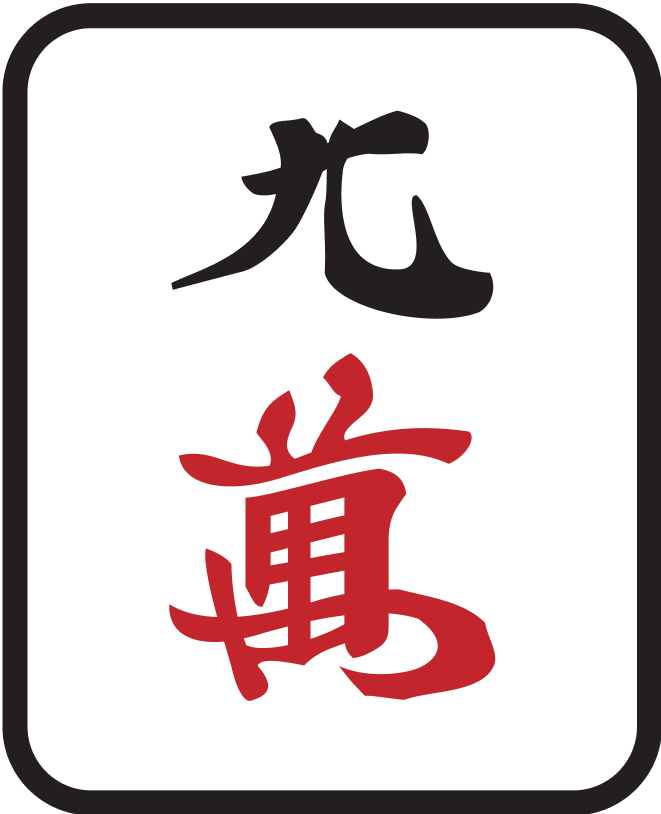
Playing card equivalent: Like ♠Spades Characteristics: Written with Chinese numerals like “一萬”, “二萬”
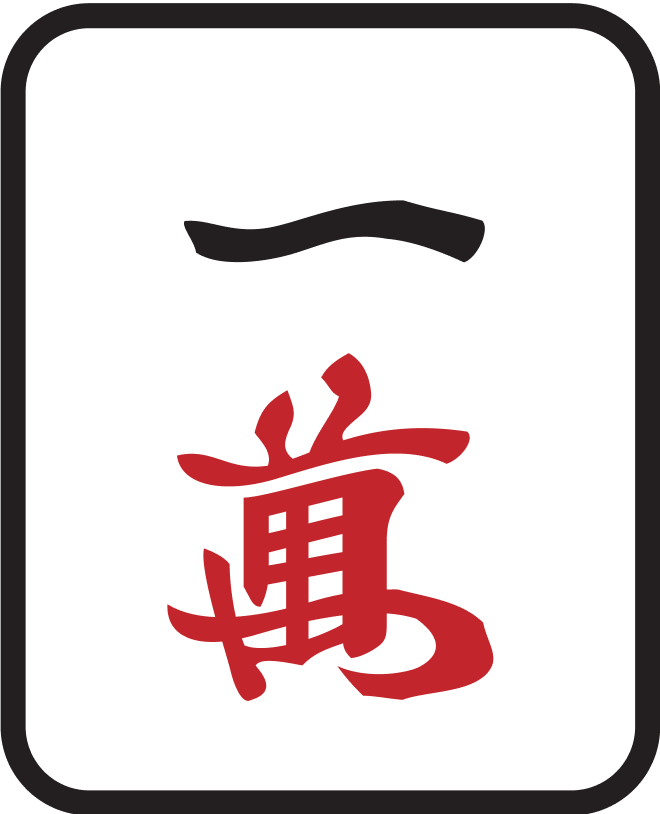
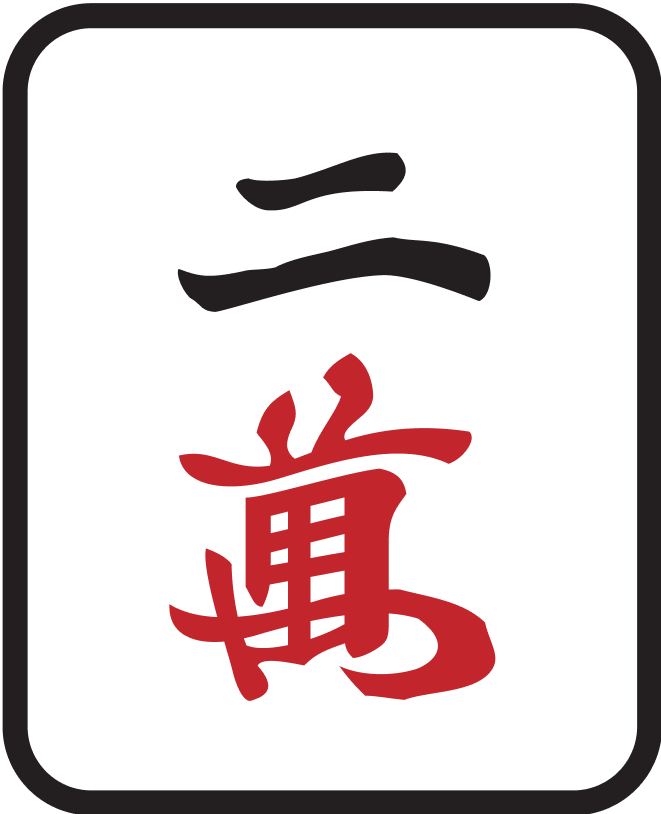

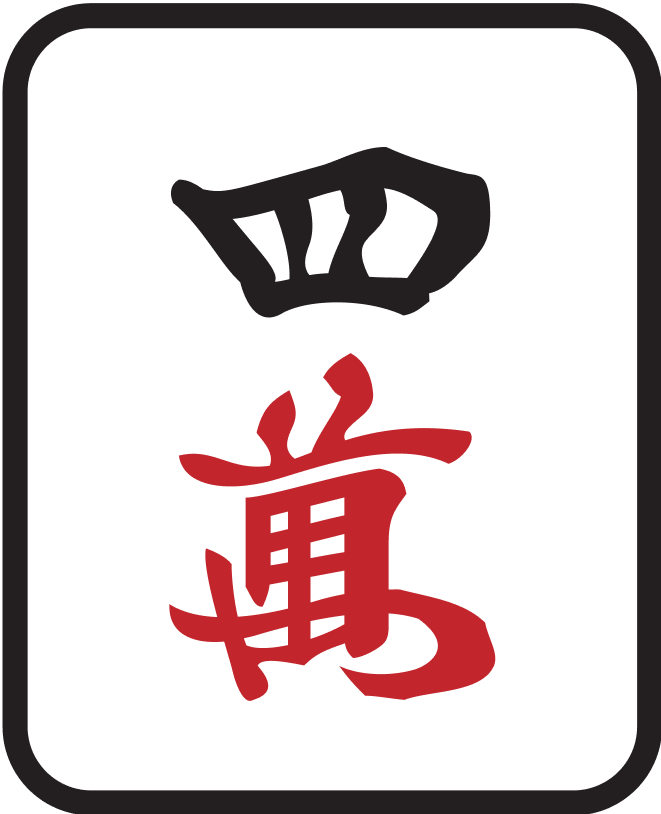
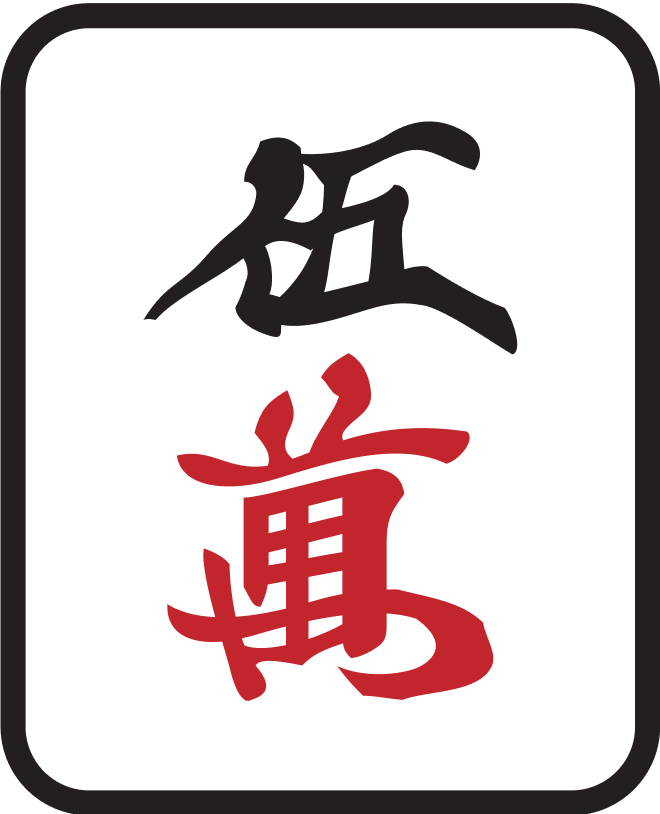
| Tile | Pronunciation | Playing Card Equivalent |
|---|---|---|
| 一萬 | Iiman | Ace of Spades |
| 二萬 | Ryanman | 2 of Spades |
| 三萬 | Sanman | 3 of Spades |
| 四萬 | Suuman | 4 of Spades |
| 五萬 | Uuman | 5 of Spades |
| 六萬 | Rouman | 6 of Spades |
| 七萬 | Chiiman | 7 of Spades |
| 八萬 | Paaman | 8 of Spades |
| 九萬 | Kyuuman | 9 of Spades |
Dots (Pin) = “Coin Symbol” Cards
Playing card equivalent: Like ♦Diamonds Characteristics: Numbers represented by circular patterns (dots)
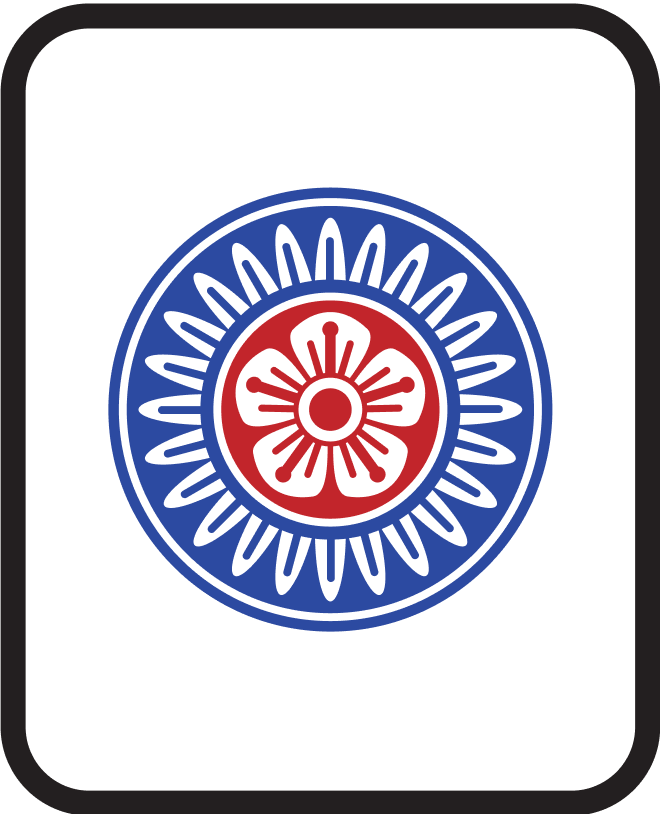
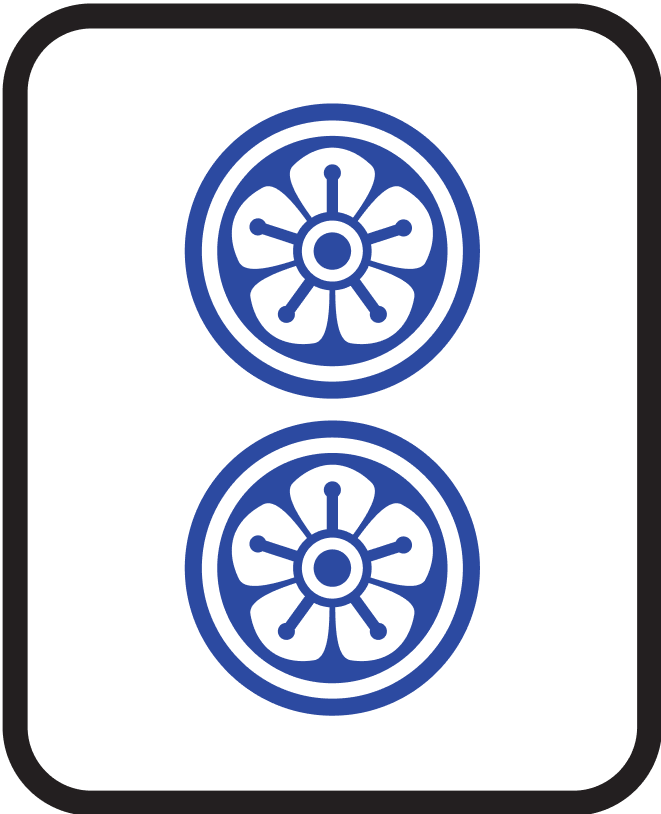
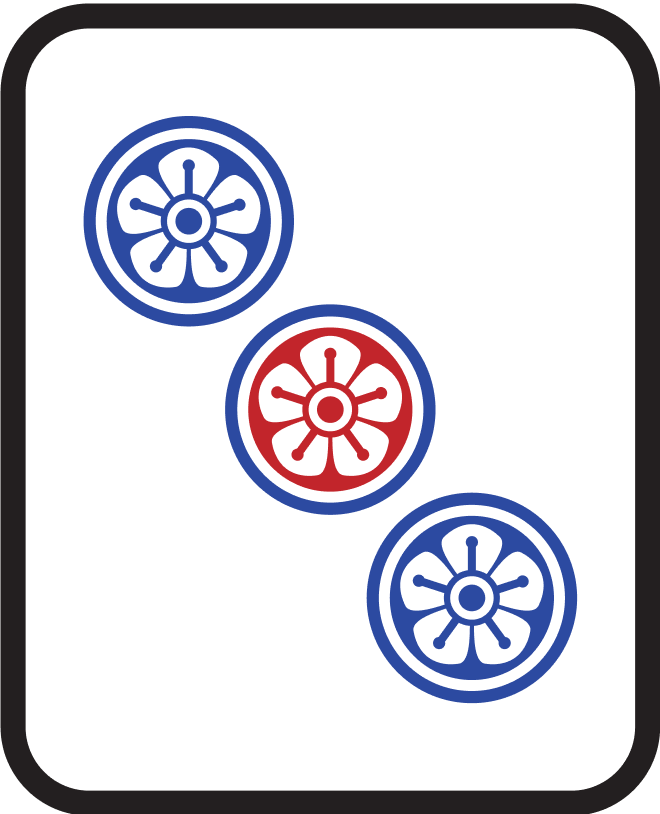
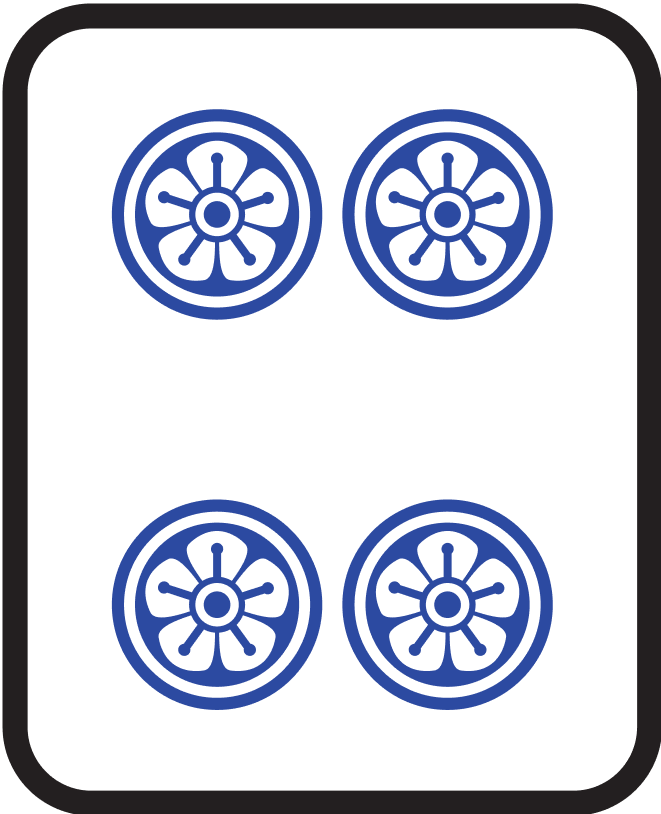
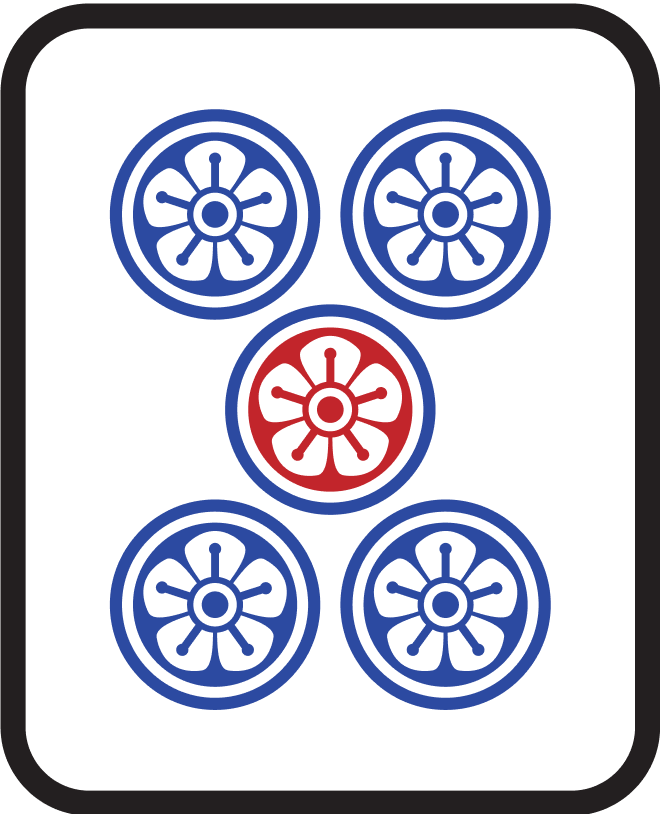
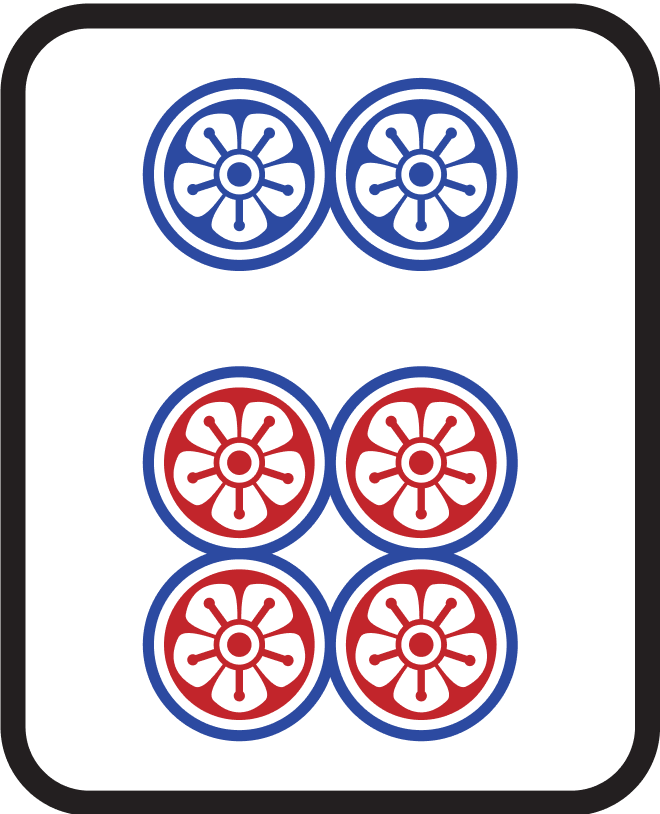
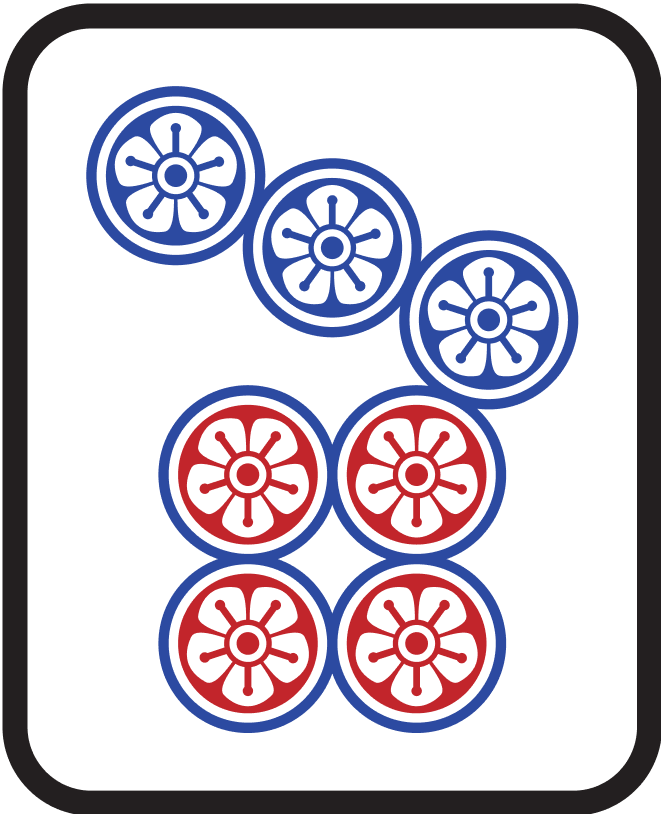
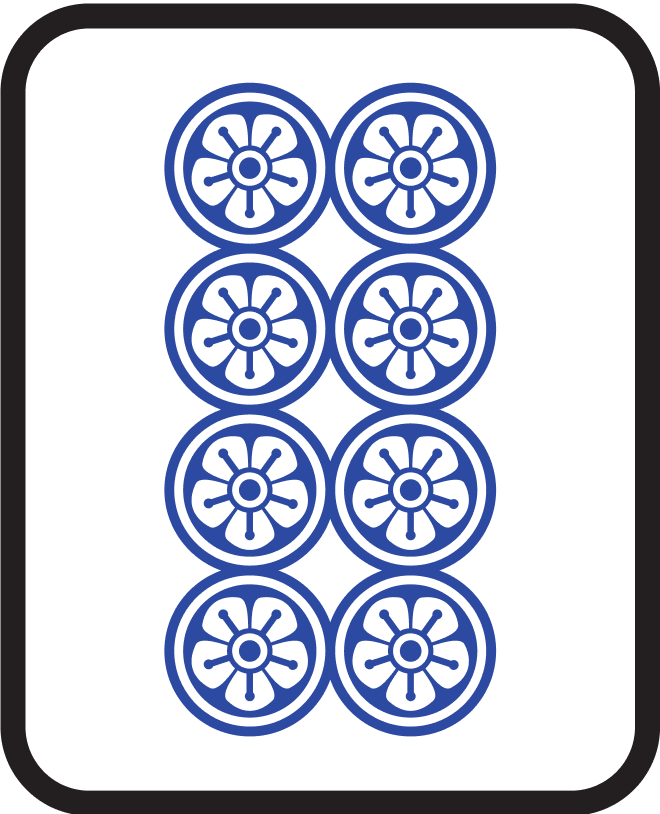
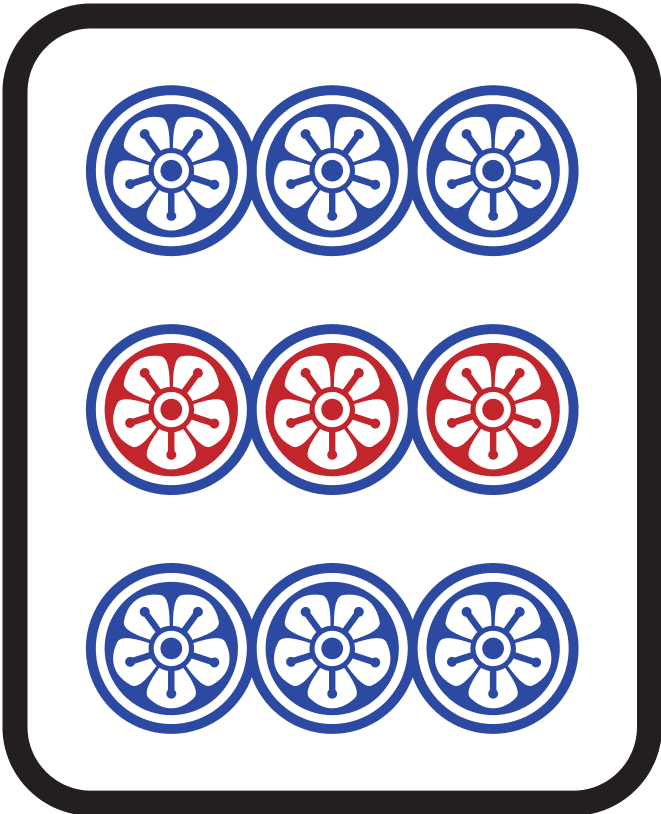
| Tile | Pronunciation | Features |
|---|---|---|
| 一筒 | Iipin | One large circle |
| 二筒 | Ryanpin | Two small circles |
| 三筒 | Sanpin | Three small circles |
| 四筒 | Suupin | Four small circles |
| 五筒 | Uupin | Five small circles |
| 六筒 | Roumin | Six small circles |
| 七筒 | Chiipin | Seven small circles |
| 八筒 | Paapin | Eight small circles |
| 九筒 | Kyuupin | Nine small circles |
Bamboo (Sou) = “Bamboo Symbol” Cards
Playing card equivalent: Like ♣Clubs
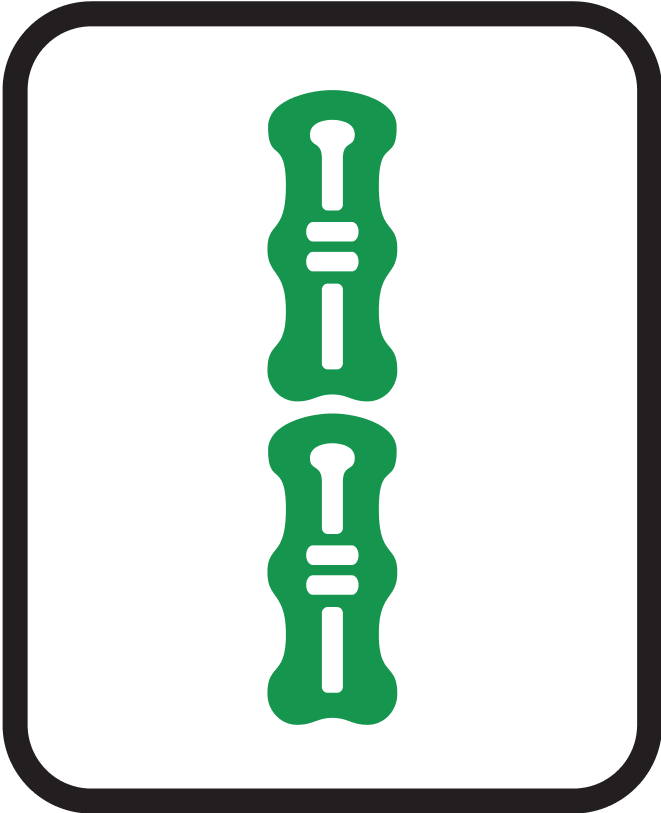
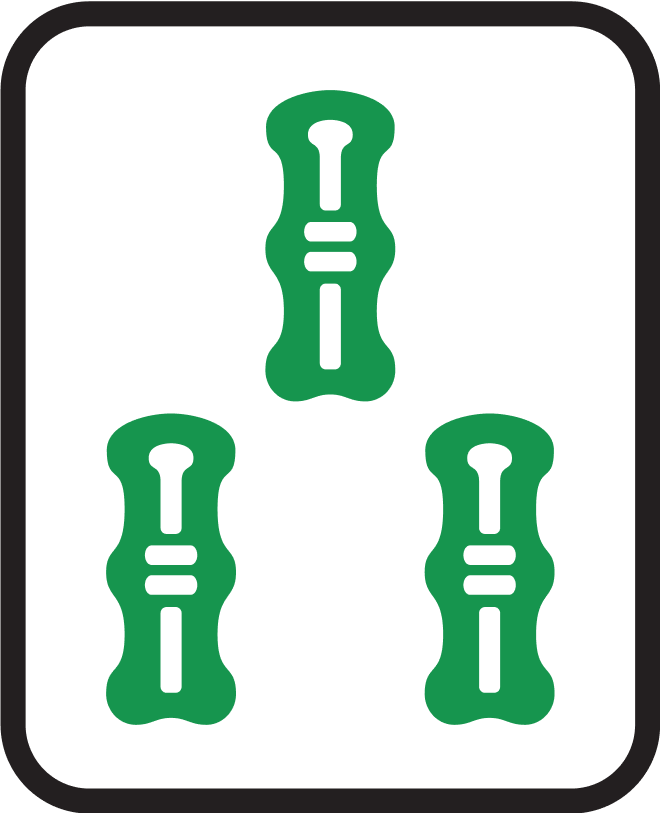
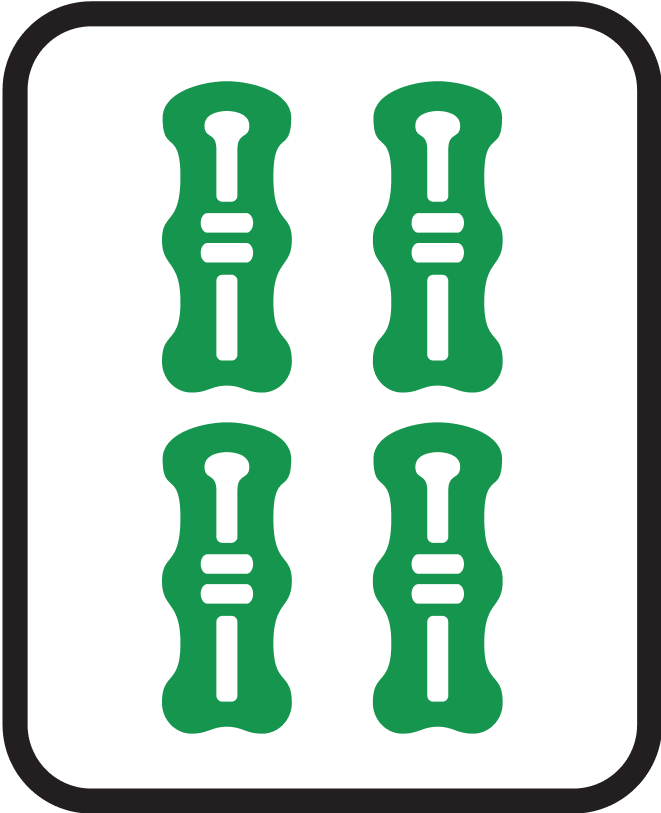
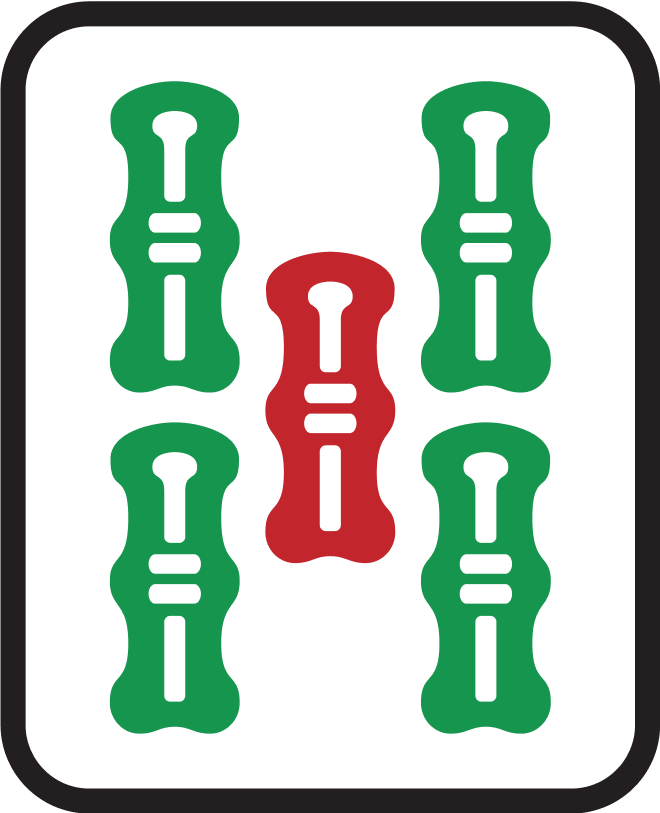
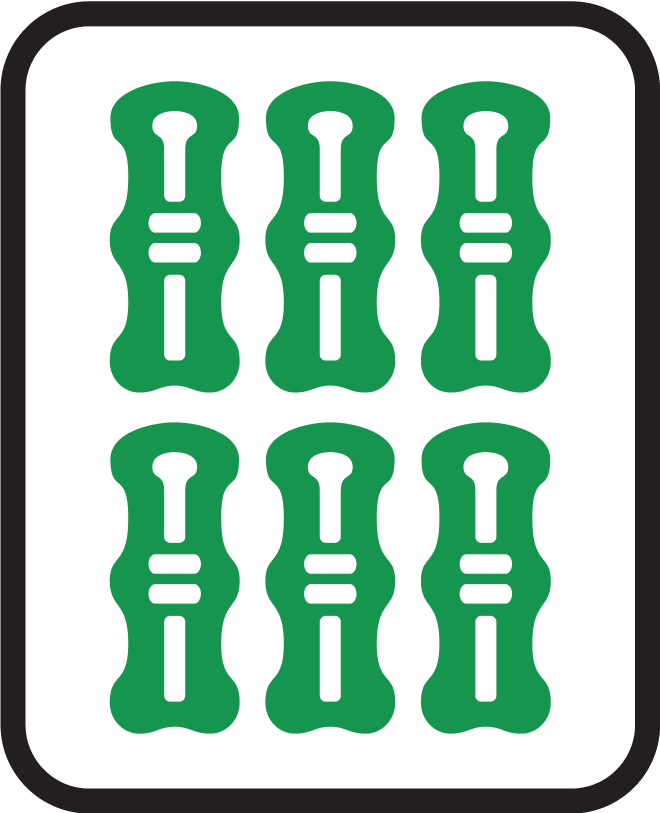
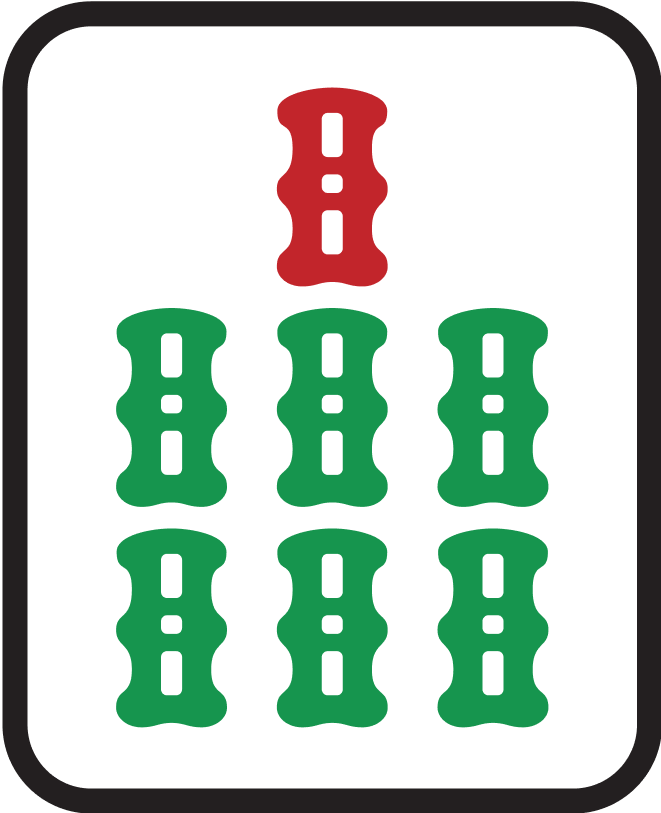
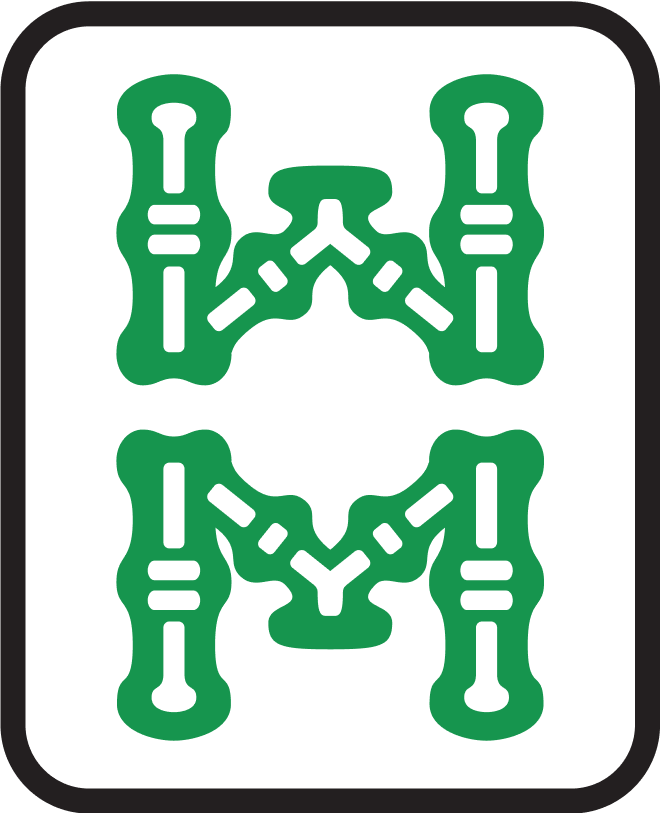
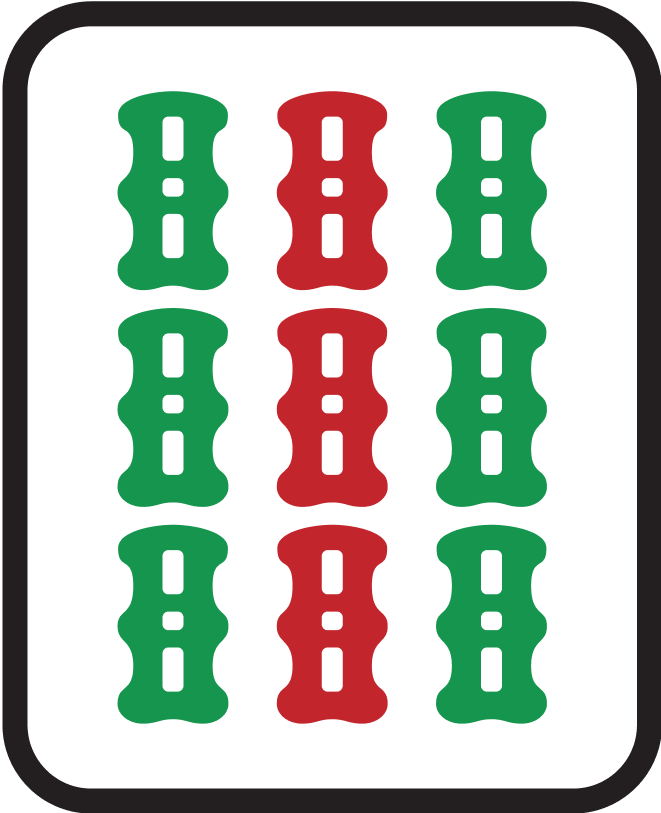
Characteristics: Numbers represented by bamboo sticks (except 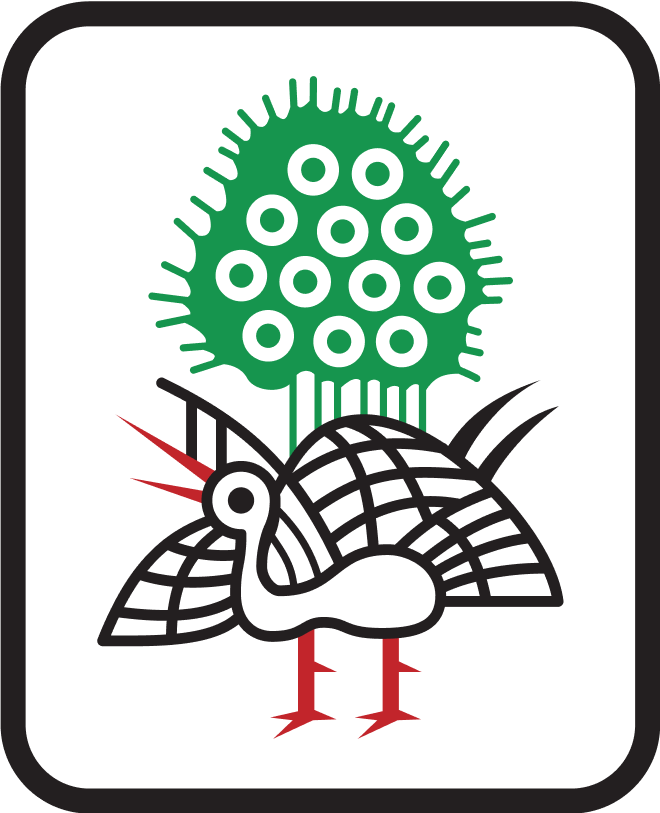 which shows a bird)
| Tile | Pronunciation | Features |
|---|---|---|
| 一索 | Iisou | Bird image (special) |
| 二索 | Ryansou | 2 bamboo sticks |
| 三索 | Sansou | 3 bamboo sticks |
| 四索 | Suusou | 4 bamboo sticks |
| 五索 | Uusou | 5 bamboo sticks |
| 六索 | Rousou | 6 bamboo sticks |
| 七索 | Chiisou | 7 bamboo sticks |
| 八索 | Paasou | 8 bamboo sticks |
| 九索 | Kyuusou | 9 bamboo sticks |
Honor Tiles = Playing Card Face Cards (J, Q, K)
Honor tiles are like “face cards” in playing cards. They have kanji characters instead of numbers, and cannot form sequences (consecutive number combinations).
Wind Tiles = “Direction Face Cards”
Playing card equivalent: Like J, Q, K special cards
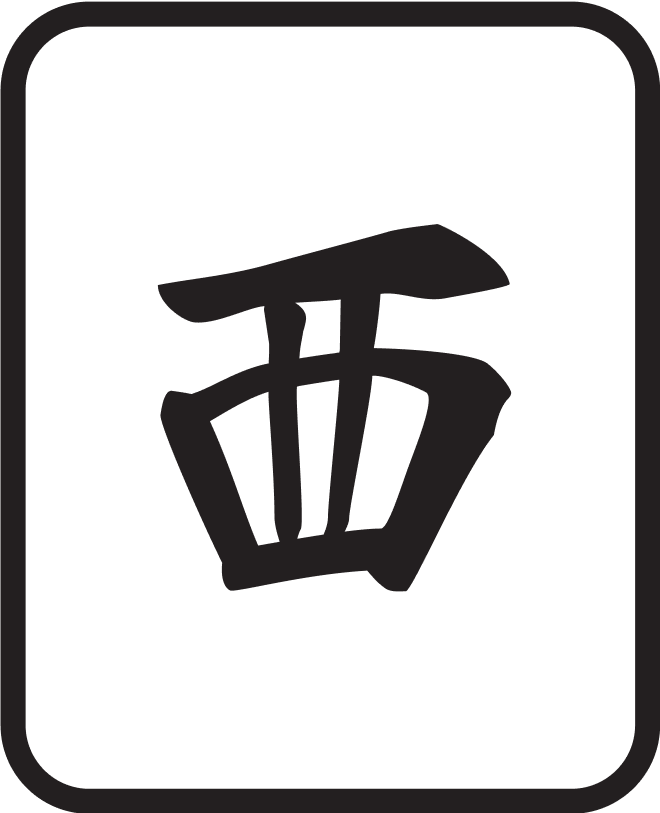
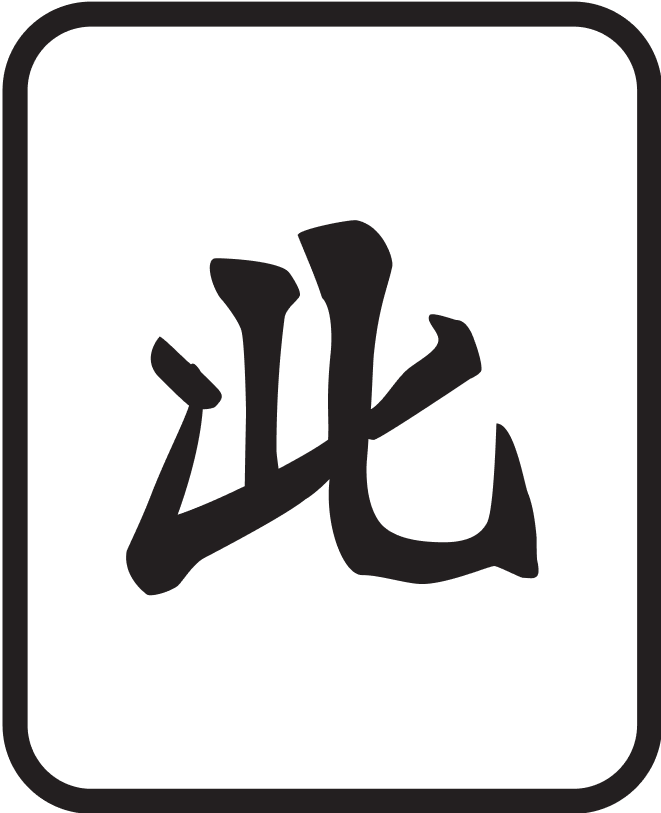
| Tile | Pronunciation | Meaning |
|---|---|---|
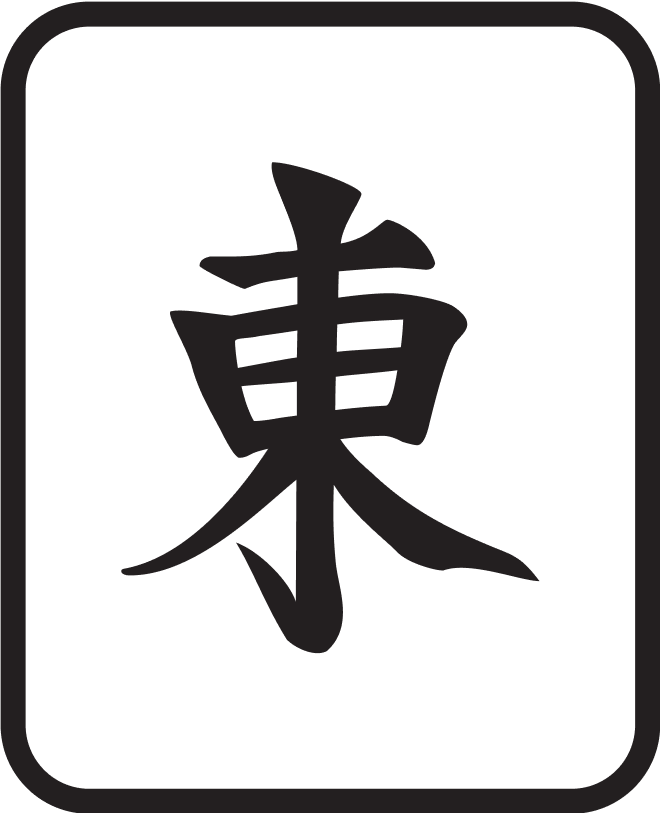
| 東 | Ton | East direction |
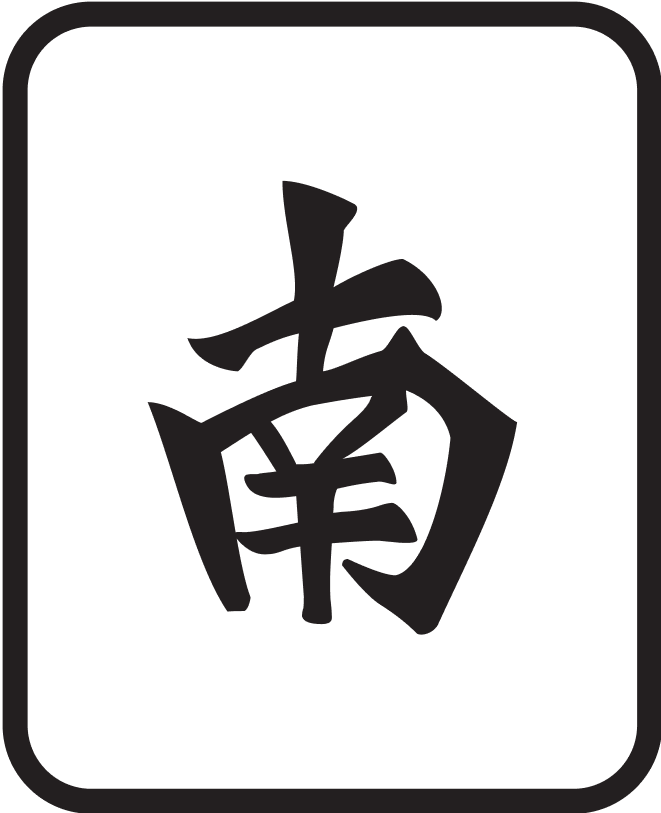
| 南 | Nan | South direction |
| 西 | Shaa | West direction |
| 北 | Pei | North direction |
Dragon Tiles = “Color Face Cards”

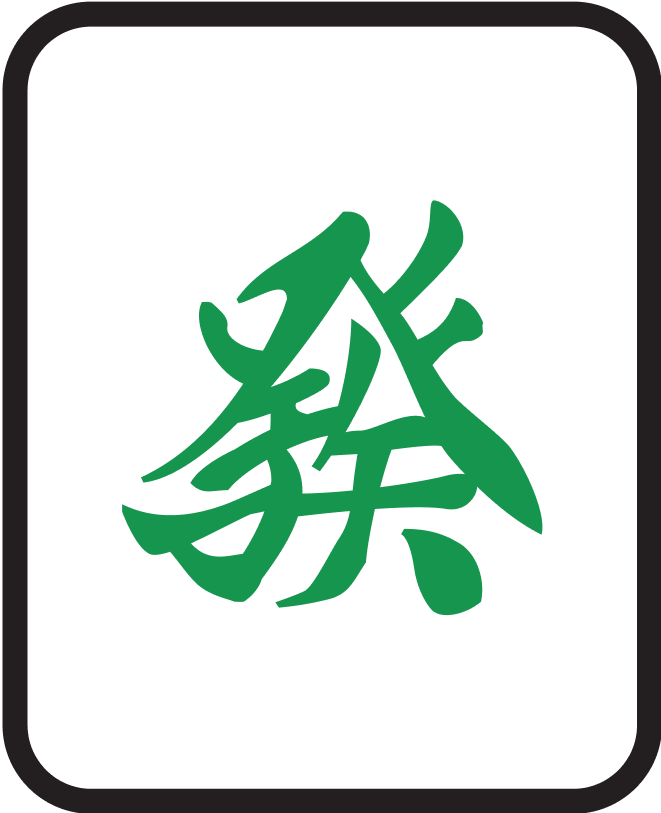
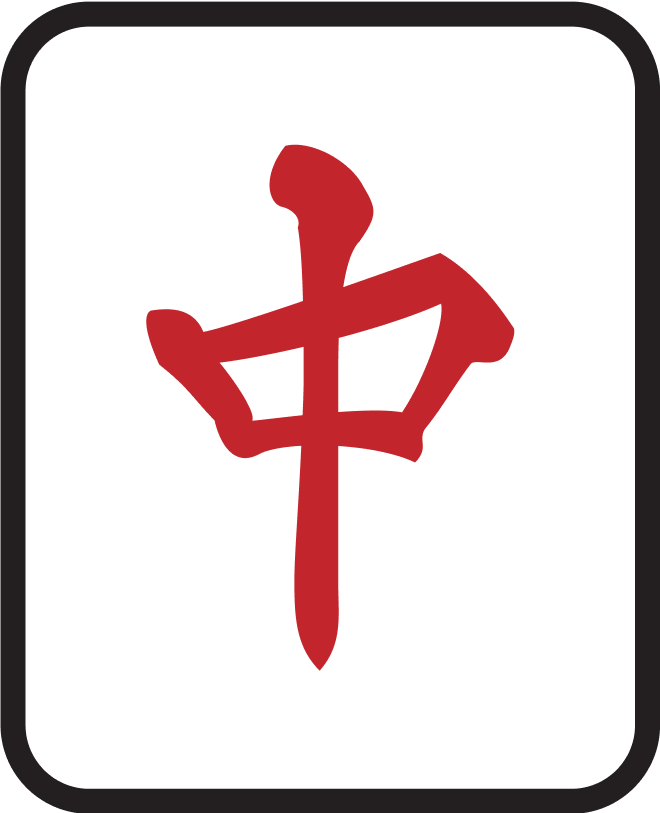
| Tile | Pronunciation | Features |
|---|---|---|
| 白 | Haku | Blank white tile |
| 發 | Hatsu | Green with “發” character |
| 中 | Chun | Red with “中” character |
Special Tiles: Red Dora
As a unique mahjong system, there are special red versions of the 5 tiles:
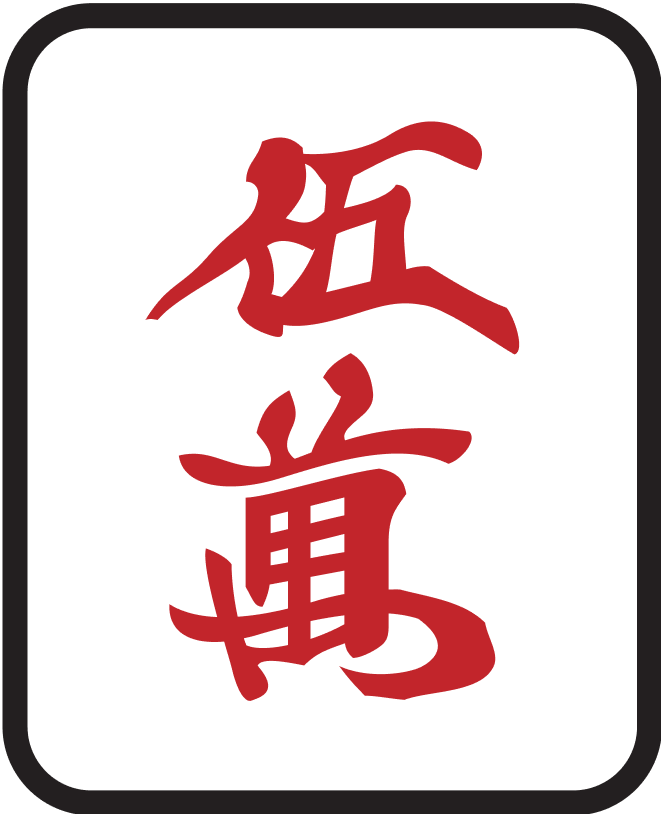
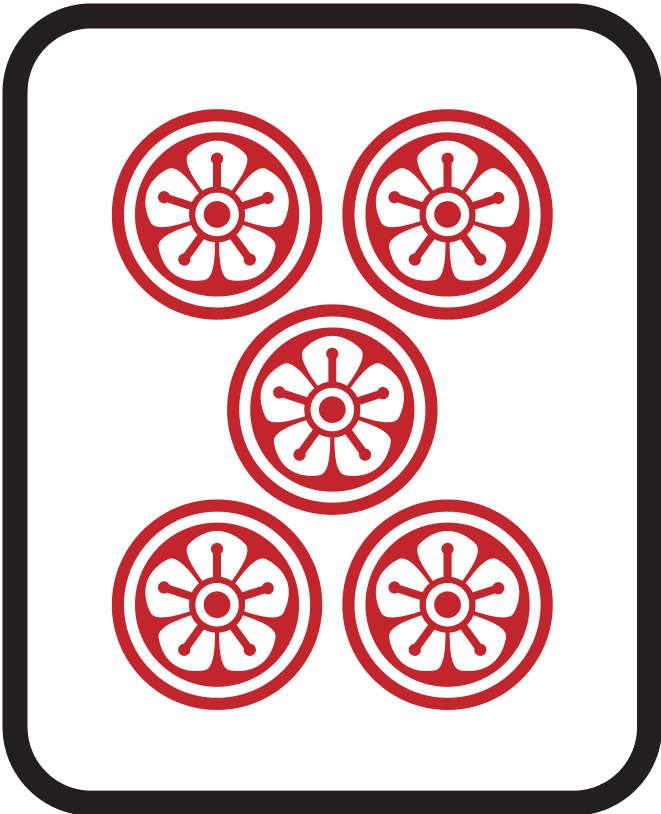
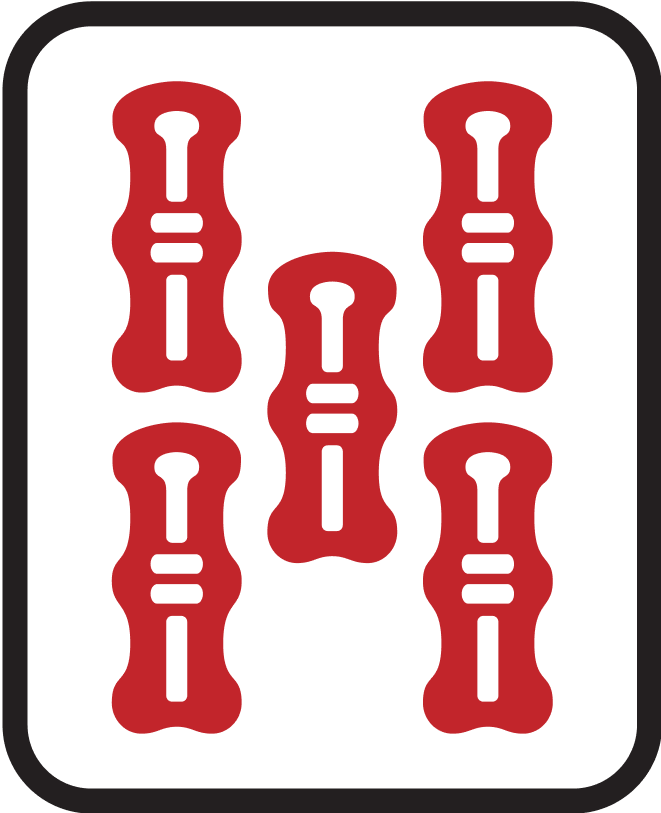
| Tile | Pronunciation | Effect |
|---|---|---|
| Red Five Characters | Aka Uuman | +1 han just for holding |
| Red Five Dots | Aka Uupin | +1 han just for holding |
| Red Five Bamboo | Aka Uusou | +1 han just for holding |
Playing card equivalent: Like “special bonus cards”
Important Tile Classifications
Terminal Tiles (Routouhai) = “Edge Numbers”
The 1s and 9s of suit tiles are called terminal tiles:
Characters:
Dots:
Bamboo:
Terminals and Honors (Yaochuuhai) = “All Special Tiles”
Terminal tiles and honor tiles combined are called terminals and honors:
Memory Tips: Understanding Through Playing Cards
Step 1: Learn the Suits
- Characters = Money symbols (Chinese numerals)
- Dots = Coin symbols (number of circles)
- Bamboo = Bamboo symbols (number of sticks)
- Honor tiles = Special cards (kanji characters)
Step 2: Learn Number Pronunciations
| Number | Reading | Characters Example | Dots Example | Bamboo Example |
|---|---|---|---|---|
| 1 | Ii | Iiman | Iipin | Iisou |
| 2 | Ryan | Ryanman | Ryanpin | Ryansou |
| 3 | San | Sanman | Sanpin | Sansou |
| 4 | Suu | Suuman | Suupin | Suusou |
| 5 | Uu | Uuman | Uupin | Uusou |
| 6 | Rou | Rouman | Roumin | Rousou |
| 7 | Chii | Chiiman | Chiipin | Chiisou |
| 8 | Paa | Paaman | Paapin | Paasou |
| 9 | Kyuu | Kyuuman | Kyuupin | Kyuusou |
Summary: Mahjong Tiles as “Advanced Playing Cards”
Comparing mahjong tiles to playing cards:
| Element | Playing Cards | Mahjong |
|---|---|---|
| Basic Structure | 4 suits × 13 cards | 3 suit types × 9 tiles + 7 honors |
| Quantity | 1 each (52 total) | 4 each (136 total) |
| Suit Example | ♠A ♠2 ♠3 | |
| Special Cards | J Q K | |
| Bonus | Joker | |
Mahjong tiles can be understood as a more strategic evolution of playing cards. By learning while looking at the tile designs, you’ll naturally remember the names!
Start by learning the flow from to , along with the 7 honor tiles , and get familiar while actually playing the game.